



Many Australian business owners believe SEO is simply about stuffing keywords into web pages. This misconception leads to missed opportunities and wasted effort. Effective SEO is a comprehensive strategy that combines technical excellence, quality content, user experience, and local relevance to drive genuine business growth. For small to medium businesses across Australia, understanding and implementing proper SEO strategies can transform online visibility, attract qualified leads, and increase revenue. This guide breaks down practical SEO approaches tailored for Australian businesses ready to compete in search results and capture their target market.
Table of Contents
- Key takeaways
- Understanding SEO fundamentals
- Core SEO strategies for small to medium businesses
- Technical SEO essentials and website performance
- Measuring SEO success and ongoing optimisation
- Boost your growth with expert SEO services
- Frequently asked questions
Key Takeaways
| Point | Details |
|---|---|
| Comprehensive SEO | SEO is a holistic strategy combining technical excellence, quality content, user experience and local relevance to drive growth. |
| Local SEO focus | Prioritise local optimisation to reach nearby customers and capture relevant search queries in your area. |
| Technical SEO foundation | Technical foundations such as site structure speed mobile optimisation and crawlability underpin reliable visibility and performance. |
| Quality content and UX | High quality content combined with a positive user experience improves rankings and converts traffic into leads. |
| Monitor and optimise | Regular tracking and optimisation of strategies helps you refine outcomes and sustain growth. |
Understanding SEO fundamentals
Search engine optimisation is the practice of improving your website to increase visibility when people search for products or services related to your business. SEO improves website visibility in search engine results pages, directly influencing web traffic and potential customer reach.
Search engines like Google use complex algorithms to evaluate and rank websites. These algorithms assess hundreds of factors to determine which pages best answer a user’s query. When someone searches for “plumber in Melbourne” or “accounting services Sydney,” search engines analyse relevant websites and display results based on relevance, authority, and user experience.
The relationship between SEO and business growth is direct. Higher rankings mean more visibility. More visibility generates increased traffic. Quality traffic from people actively searching for your services converts into leads and sales. For Australian small to medium businesses, this organic traffic often proves more cost-effective than paid advertising over time.
Basic SEO components work together to improve your rankings:
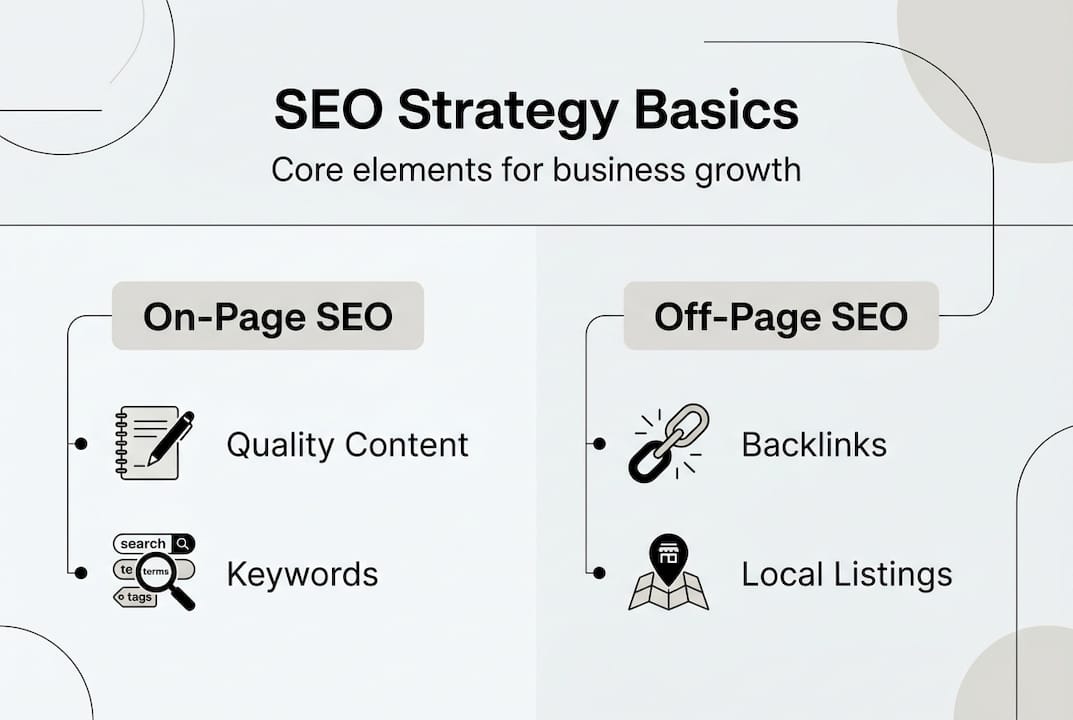
- Keywords: Terms and phrases your target customers use when searching
- Content: Valuable information that answers user questions and demonstrates expertise
- Links: Both internal connections within your site and external backlinks from other authoritative websites
- Technical SEO: Site structure, speed, mobile optimisation, and crawlability factors
Pro Tip: Focus on search intent rather than just keywords. Understanding why someone searches helps you create content that genuinely solves their problems, which search engines reward with better rankings.
Each component supports the others. Great content needs proper keywords to be discovered. Technical excellence ensures that content loads quickly and displays correctly. Quality backlinks signal authority and trustworthiness. Together, these elements create a foundation for sustainable online visibility and business growth.
Core SEO strategies for small to medium businesses
Implementing effective SEO requires strategic action across multiple areas. Here are proven approaches tailored for Australian SMBs.
Keyword research forms the starting point. Follow these steps:
- List your core products, services, and topics
- Use tools like Google Keyword Planner or Ubersuggest to find related search terms
- Analyse search volume and competition for each keyword
- Prioritise long-tail keywords (longer, specific phrases) that match customer intent
- Map keywords to specific pages on your website
On-page SEO optimisation ensures search engines understand your content. Best practices include:
- Craft compelling title tags with primary keywords near the beginning
- Write descriptive meta descriptions that encourage clicks
- Use header tags (H1, H2, H3) to structure content logically
- Include keywords naturally in the first paragraph and throughout content
- Optimise images with descriptive file names and alt text
- Create clear, descriptive URLs
Content creation drives SEO success. Quality matters more than quantity. Your content should educate, inform, or solve problems for your target audience. Australian businesses succeed by creating locally relevant content that addresses specific customer needs. Case studies, how-to guides, industry insights, and answers to common questions all attract organic traffic.

Local SEO tactics prove especially valuable for businesses serving specific geographic areas. Local SEO can significantly boost visibility by ranking your business in Google map packs and local search results. Optimise your Google Business Profile with accurate information, regular posts, and customer reviews. Include location-specific keywords naturally in your content. Build citations (mentions of your business name, address, and phone number) across relevant directories.
Building authoritative backlinks strengthens your site’s credibility. Quality backlinks from reputable Australian websites signal to search engines that your content is trustworthy. Strategies include:
- Creating shareable content that naturally attracts links
- Guest posting on industry-relevant blogs
- Building relationships with complementary businesses
- Getting listed in quality business directories
- Earning media coverage through newsworthy announcements
Pro Tip: One high-quality backlink from a respected industry site outweighs dozens of low-quality directory links. Focus on relevance and authority rather than quantity.
| SEO tactic | Effort required | Time to results | Impact potential |
|---|---|---|---|
| Keyword optimisation | Medium | 2-4 months | High |
| Content creation | High | 3-6 months | Very high |
| Local SEO | Medium | 1-3 months | High for local businesses |
| Technical SEO | Medium | 1-2 months | High |
| Link building | High | 4-8 months | Very high |
Balancing these strategies based on your resources and goals creates sustainable growth. Start with foundational technical SEO and on-page optimisation, then build momentum through consistent content creation and strategic link building. Enhancing SEO performance requires patience and persistence, but the long-term benefits justify the investment.
Technical SEO essentials and website performance
Technical SEO forms the invisible foundation that supports all other optimisation efforts. Without proper technical implementation, even brilliant content struggles to rank. Google prioritises website loading speed and mobile-friendliness as ranking factors in search results, making technical excellence non-negotiable.
Site speed directly impacts both rankings and user experience. Slow-loading pages frustrate visitors and increase bounce rates. Optimisation strategies include:
- Compressing images without sacrificing quality
- Enabling browser caching to store static resources
- Minimising CSS, JavaScript, and HTML files
- Using a content delivery network (CDN) for faster global access
- Choosing quality hosting with adequate resources
Mobile optimisation is essential as most Australians now search primarily on smartphones. Google uses mobile-first indexing, meaning it evaluates your mobile site first when determining rankings. Ensure your website uses responsive design that adapts seamlessly to different screen sizes. Test functionality on various devices. Simplify navigation for touch interfaces. Make buttons and links easy to tap.
Secure connections through HTTPS protect user data and build trust. Google explicitly favours secure sites in rankings. Installing an SSL certificate is straightforward and often free through hosting providers. The small technical effort yields significant SEO and credibility benefits.
Search engine crawlability determines whether search engines can access and index your content. Technical barriers prevent even excellent content from ranking. Ensure your site:
- Has a clean, logical structure with clear navigation
- Includes an XML sitemap submitted to Google Search Console
- Uses robots.txt properly to guide crawlers without blocking important pages
- Avoids duplicate content issues through canonical tags
- Fixes broken links and 404 errors promptly
Pro Tip: Regularly audit your site using tools like Google Search Console and Screaming Frog to identify technical issues before they impact rankings. Monthly checks catch problems early.
Structured data markup helps search engines understand your content context. Schema markup can enhance your search listings with rich snippets showing ratings, prices, event dates, or other relevant information. These enhanced listings attract more clicks and improve visibility.
Core Web Vitals measure user experience through specific metrics: loading performance, interactivity, and visual stability. Google incorporates these signals into rankings. Focus on improving Largest Contentful Paint (loading speed), First Input Delay (interactivity), and Cumulative Layout Shift (visual stability). Tools like PageSpeed Insights provide specific recommendations.
Technical SEO expertise often requires specialist knowledge, but understanding the fundamentals helps you maintain site health and communicate effectively with developers or agencies.
Measuring SEO success and ongoing optimisation
Tracking performance separates successful SEO from guesswork. Regular SEO performance monitoring and optimisation can significantly increase search rankings and traffic, turning initial efforts into compounding returns.
Key metrics to monitor include:
- Organic traffic: Visitors arriving through unpaid search results
- Keyword rankings: Position in search results for target terms
- Click-through rate: Percentage of people who click your listing when it appears
- Bounce rate: Visitors who leave without interacting
- Conversion rate: Percentage of visitors who complete desired actions
- Page load time: Speed of site and individual pages
- Backlink profile: Quality and quantity of sites linking to you
Popular SEO tools provide insights across these metrics. Google Analytics tracks traffic sources, user behaviour, and conversions. Google Search Console reveals search performance, indexing status, and technical issues. Specialised platforms like SEMrush, Ahrefs, or Moz offer comprehensive keyword tracking, competitor analysis, and backlink monitoring.
| Tool | Primary function | Best for | Pricing |
|---|---|---|---|
| Google Analytics | Traffic and behaviour analysis | Understanding user actions | Free |
| Google Search Console | Search performance and technical health | Monitoring Google visibility | Free |
| SEMrush | Comprehensive SEO and competitor research | All-in-one SEO management | Paid |
| Ahrefs | Backlink analysis and content research | Link building strategies | Paid |
| Screaming Frog | Technical site audits | Finding technical issues | Free/Paid |
Ongoing optimisation follows a systematic approach:
- Review performance data monthly to identify trends and opportunities
- Analyse which pages and keywords drive the most valuable traffic
- Update underperforming content with fresh information and better optimisation
- Identify and fix technical issues promptly
- Expand content around topics showing positive momentum
- Monitor competitors to spot gaps and opportunities
Algorithm updates require adaptive strategies. Google makes thousands of changes yearly, with major updates several times annually. Rather than chasing every update, focus on fundamental quality. Sites built on solid technical foundations, valuable content, and genuine user focus weather algorithm changes better than those relying on shortcuts.
When rankings drop after an update, assess whether the change targets a specific issue (like thin content or poor mobile experience) and address root causes rather than symptoms. Most algorithm updates reward sites that better serve user needs.
Pro Tip: Set up automated reports in Google Analytics and Search Console to receive regular performance summaries. Consistent monitoring helps you spot issues and opportunities quickly without manual checking.
SEO audit and performance tracking services can provide detailed analysis and recommendations if you lack time or expertise for comprehensive monitoring. Professional audits often uncover issues and opportunities that casual review misses, accelerating improvement.
Boost your growth with expert SEO services
Implementing comprehensive SEO strategies requires time, expertise, and consistent effort. While this guide provides a solid foundation, many Australian businesses benefit from professional SEO services that accelerate results and maximise return on investment.
Design Box Digital combines over 20 years of experience with technical SEO expertise and data-driven strategies tailored for Australian businesses. Our team handles everything from technical audits and on-page optimisation to content strategy and link building, allowing you to focus on running your business while we drive your online growth.
Our digital marketing services integrate SEO with complementary strategies like Google Ads, social media, and website optimisation for comprehensive online presence. We specialise in helping small to medium businesses achieve sustainable growth through increased visibility, qualified traffic, and improved conversions.
Ready to discover your site’s SEO potential? Start with a free SEO audit that identifies specific opportunities and technical issues holding back your rankings. Our detailed analysis provides actionable recommendations you can implement immediately or discuss as part of a comprehensive strategy.
Frequently asked questions
What is SEO and why does it matter for my business?
SEO is the practice of optimising your website to rank higher in search engine results, making it easier for potential customers to find you online. It matters because most Australians use search engines to find products and services, and businesses ranking on the first page capture the majority of clicks and leads.
How is SEO different from paid advertising?
SEO focuses on earning organic (unpaid) rankings through optimisation, while paid advertising buys immediate visibility through platforms like Google Ads. SEO takes longer to show results but provides sustainable, cost-effective traffic over time, whereas paid ads stop generating traffic when you stop paying.
How long does SEO take to show results?
Most businesses see initial improvements within three to six months, with significant results typically appearing after six to twelve months of consistent effort. Timeline varies based on competition, current site condition, and strategy comprehensiveness. SEO is a long-term investment rather than a quick fix.
What makes local SEO important for Australian businesses?
Local SEO helps you appear in location-specific searches and Google map packs, connecting you with nearby customers actively looking for your services. For businesses serving specific geographic areas, local optimisation often delivers the highest quality leads at the lowest cost.
What tools do I need to get started with SEO?
Begin with free tools like Google Analytics for traffic analysis, Google Search Console for search performance monitoring, and Google Business Profile for local visibility. These provide essential insights without cost. As you advance, consider investing in comprehensive platforms like SEMrush or Ahrefs for deeper analysis and competitive research.
Recommended
- How SEO Boosts Online Visibility for Business Owners • Design Box Digital
- Proven Strategies to Enhance Your SEO Performance • Design Box Digital
- SEO Agency Melbourne | Technical & AI Search Experts | Design Box
- SEO in 2026: A Guide to Visibility & Growth • Design Box Digital