



Most Australian business owners assume paid ads are the fastest route to new leads. It’s an understandable belief, but the numbers tell a different story. Businesses with strong lead generation strategies produce 50% more sales-ready leads at 33% lower cost per lead, and SEO sits at the heart of that advantage. When executed with intent, SEO doesn’t just attract traffic. It attracts the right people, at the right moment, ready to act. This guide breaks down exactly how SEO generates leads for Australian SMBs and what you can do to make it work for your business.
Table of Contents
- What is lead generation and why does it matter?
- The unique value of SEO in lead generation
- How SEO powers the lead journey
- SEO vs paid ads: What really delivers for SMBs?
- Common SEO pitfalls and how to avoid them
- Getting started: Practical steps to maximise SEO-driven leads
- Ready to amplify your leads with SEO?
- Frequently asked questions
Key Takeaways
| Point | Details |
|---|---|
| SEO lowers lead cost | SEO delivers warmer leads at a much lower cost than paid ads, especially over time. |
| Long-term compounding benefits | Consistent SEO investment leads to sustained, improving lead volume and ROI. |
| Combine SEO and ads for best results | A hybrid approach gives faster lead flow and stable long-term growth. |
| Avoid common pitfalls | Patience and technical setup are crucial—shortcutting SEO can set you back. |
What is lead generation and why does it matter?
A lead is any person who shows genuine interest in your product or service. That might be someone filling out a contact form, calling your business, booking a consultation, or downloading a resource. Lead generation is the process of attracting those people and converting them into potential customers.
For small and medium businesses, lead generation is the engine behind sustainable growth. Without a consistent flow of leads, revenue becomes unpredictable. The challenge is that many businesses rely on a single channel, often paid ads, which creates fragility. When ad budgets dry up, so do the leads.
The most effective lead generation strategies use multiple channels working together. These typically include:
- Organic search (SEO): Attracts visitors actively searching for your solution
- Paid advertising: Delivers immediate visibility for targeted terms
- Social media: Builds awareness and nurtures relationships
- Email marketing: Re-engages existing contacts and warm prospects
- Referrals and partnerships: Leverages trust from existing customers
SEO stands out because it targets intent. Someone searching “plumber in Melbourne” or “accountant for small business Sydney” is already in buying mode. That’s a fundamentally different visitor to someone who scrolls past a social ad. Understanding lead generation basics helps you build a strategy that prioritises quality over volume.
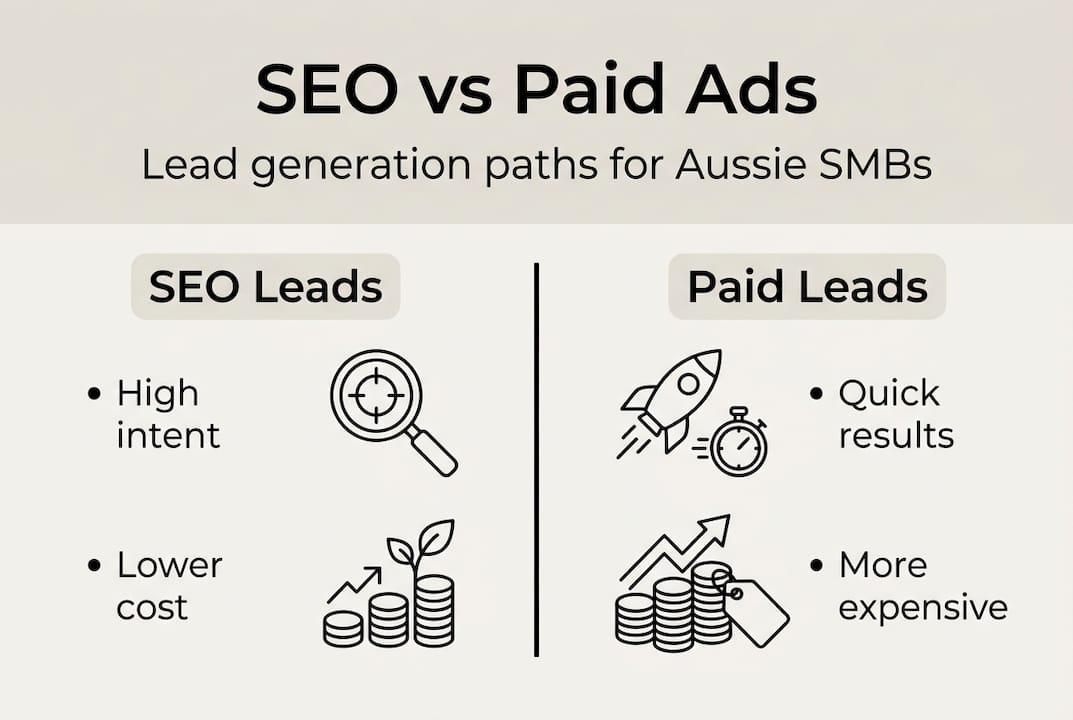
The results speak for themselves. Case studies have recorded 165% organic lead increases within six months, alongside 175% revenue growth and traffic improvements of 45% or more. These aren’t outliers. They reflect what happens when SEO is treated as a core business investment rather than an afterthought.
Both lead volume and quality matter. A hundred low-quality leads waste your team’s time. Twenty high-intent leads from organic search can fill your pipeline for the month. That distinction is what makes SEO so valuable for resource-conscious SMBs.
The unique value of SEO in lead generation
SEO leads are warmer. When someone finds your business through a Google search, they’ve already expressed intent. They typed a question or a need, and your website answered it. That’s a very different starting point compared to interrupting someone mid-scroll on Instagram.
The cost difference is significant. SEO cost per lead typically sits between AUD $20 and $50, while paid ads often range from AUD $30 to $80 per lead. Over time, that gap widens because SEO compounds. A well-optimised page keeps generating leads months or years after it’s published, without ongoing spend.
| Channel | Avg. cost per lead (AUD) | Traffic share for SMBs | Sustainability |
|---|---|---|---|
| SEO (organic) | $20 to $50 | 53% to 68% | Long-term, compounding |
| Google Ads | $30 to $80 | Variable | Stops when budget stops |
| Social media ads | $25 to $70 | Variable | Stops when budget stops |
| Email marketing | $5 to $20 | Low direct traffic | Moderate, list-dependent |
Organic search accounts for 53% to 68% of total website traffic for most SMBs. That’s the majority of your visitors arriving without you spending a cent on clicks. The ROI compounds further over time, with businesses commonly seeing returns above 300% after six to twelve months of consistent SEO investment.
“SEO is not a cost. It’s an asset. Every optimised page, every quality backlink, and every piece of helpful content builds equity in your business that paid ads simply cannot replicate.”
Pro Tip: Don’t judge SEO by month-one results. The compounding effect means your return accelerates over time. Track rankings, organic sessions, and lead form completions monthly so you can see the trajectory clearly.
Learning about boosting online visibility with SEO gives you a clearer picture of how visibility translates directly into enquiries. For a broader view of how SEO fits into business growth and SEO strategy, the connection between rankings and revenue becomes very clear.
How SEO powers the lead journey
SEO isn’t one single activity. It’s a set of interconnected practices that work together to move a stranger from a Google search to a lead in your pipeline. Here’s how that journey typically unfolds:
- Keyword research: You identify the terms your ideal customers are searching. High-intent phrases like “emergency electrician Brisbane” or “bookkeeper for tradies” signal buying readiness.
- On-page optimisation: Your page titles, meta descriptions, headings, and body content are structured around those keywords so Google understands what your page is about.
- Technical SEO: Your site loads fast, works on mobile, and has no broken links or crawl errors blocking Google from indexing your pages.
- Content creation: You publish helpful, relevant content that answers your audience’s questions and builds trust before they even contact you.
- Local SEO: Your Google Business Profile is optimised, your NAP (name, address, phone) is consistent across directories, and you’re earning local reviews.
- Conversion optimisation: Clear calls to action, easy-to-find contact forms, and trust signals (testimonials, credentials) turn visitors into leads.
Research confirms the impact is substantial. A meta-analysis effect size of d=1.049 across SEO studies indicates a high, consistent effect on traffic and rankings. That’s not a marginal improvement. That’s a meaningful, measurable lift.
For Australian SMBs, local SEO deserves special attention. Most of your customers are searching with location intent, whether they include a suburb name or not. Google uses their location to serve local results. The local SEO benefits for businesses targeting specific regions are significant and often underutilised.

Pro Tip: Optimise your Google Business Profile completely. Add photos, respond to reviews, list your services, and post updates regularly. It’s one of the fastest ways to improve local visibility without touching your website.
SEO vs paid ads: What really delivers for SMBs?
This isn’t an either/or question. But understanding the differences helps you allocate budget wisely.
| Factor | SEO | Paid ads |
|---|---|---|
| Time to results | 4 to 12 months | Immediate |
| Cost per lead | Lower long-term | Higher ongoing |
| Sustainability | Compounding | Stops with budget |
| Trust factor | High (organic) | Lower (ad label) |
| Best for | Long-term growth | Testing, seasonal spikes |
Paid ads win on speed. If you’re launching a new product, running a seasonal promotion, or entering a new market, ads get you in front of people immediately. SEO simply can’t match that timeline.
SEO wins on sustainability and trust. Organic results consistently earn higher click-through rates than paid ads because users trust them more. And once you rank, you keep generating leads without paying per click.
The scenarios where each shines:
- Choose SEO when: You want long-term lead flow, you’re building brand authority, or your budget is limited and you need compounding returns
- Choose paid ads when: You need leads fast, you’re testing a new offer, or you’re targeting a highly seasonal market
- Use both when: You want to dominate search results pages, accelerate early growth while SEO builds, or retarget organic visitors with ads
“The smartest Australian SMBs don’t choose between SEO and ads. They use ads to generate leads now while SEO builds the foundation for leads later.”
Running Google Ads alongside SEO is a proven hybrid approach. Ads fill the pipeline while your organic rankings grow. Over time, as SEO matures, you can reduce ad spend without losing lead volume.
Common SEO pitfalls and how to avoid them
Even with the best intentions, many SMBs undermine their own SEO results. Here are the mistakes we see most often:
- Expecting overnight results: SEO takes 3 to 12 months to show meaningful results, especially for newer sites or competitive markets. Abandoning it at month two is like planting a tree and pulling it up before it roots.
- Poor site structure: If Google can’t crawl your site efficiently, your pages won’t rank. Broken links, duplicate content, and slow load times all suppress your visibility.
- Ignoring mobile: Over 60% of Australian searches happen on mobile. A site that performs poorly on a phone loses leads before they even read your content.
- Chasing cheap shortcuts: Black hat tactics like buying links or keyword stuffing can trigger Google penalties that take months to recover from.
- Neglecting algorithm updates: Google updates its algorithm hundreds of times per year. Staying informed and adapting your strategy is non-negotiable.
The connection between web development and SEO is tighter than most business owners realise. A poorly built website is an SEO liability regardless of how good your content is. If you’re unsure whether your site is holding you back, understanding the value of hiring an SEO professional can help you make a more informed decision.
Pro Tip: Set up Google Search Console from day one. It shows you exactly which queries are driving impressions and clicks, flags technical errors, and gives you early signals of ranking movement before traffic changes become obvious.
Getting started: Practical steps to maximise SEO-driven leads
You don’t need to overhaul everything at once. Start with these steps and build momentum:
- Audit your website: Check for technical issues, slow load times, broken links, and missing meta data. Free tools like Google Search Console and Screaming Frog give you a solid starting point.
- Define your lead goals: What counts as a lead for your business? A phone call, a form submission, a booking? Set this up as a conversion goal in Google Analytics so you can measure what matters.
- Research high-intent local keywords: Focus on phrases that signal buying intent combined with your location. “Conveyancer in Perth” converts better than “what is conveyancing.”
- Optimise your key pages: Update title tags, meta descriptions, and headings on your service pages. Make sure each page has a clear call to action that guides visitors toward becoming a lead.
- Create locally relevant content: Blog posts, guides, and FAQs that address your audience’s real questions build trust and attract long-tail search traffic.
- Build and optimise your Google Business Profile: Claim it, complete every field, add photos, and actively collect reviews from satisfied customers.
- Track, review, and adjust: SEO is iterative. Review your rankings and lead data monthly and adjust based on what’s working.
Businesses that commit to this process consistently see ROI above 300% after six to twelve months. The key is consistency and patience. Reviewing SEO strategy tips and staying current with SEO visibility and growth trends ensures your efforts stay aligned with how Google is evolving.
Ready to amplify your leads with SEO?
Understanding SEO is one thing. Executing it consistently while running a business is another challenge entirely. The businesses that see the strongest lead results are those that combine a clear strategy with expert implementation.
At Design Box Digital, we’ve spent over 20 years helping Australian SMBs build SEO foundations that generate real, qualified leads. From technical audits to content strategy and local SEO, our team handles the complexity so you can focus on converting the leads that come in. Explore our SEO services to see how we approach lead-focused SEO, or review our SEO enhancement strategies to understand the frameworks we use. When you’re ready to move from learning to doing, we’re here to help.
Frequently asked questions
How long does SEO take to generate leads?
SEO typically takes 4 to 12 months to deliver consistent leads, but the results compound over time, making it far more cost-effective than paid channels in the long run.
Is SEO really cheaper than paid ads for lead generation?
Yes. SEO leads cost AUD $20 to $50 per lead on average, while paid ads typically range from AUD $30 to $80, and those costs continue every time someone clicks.
What main SEO activities influence lead generation?
On-page content optimisation, technical site fixes, and local SEO drive the majority of search-driven leads, with research showing a high effect size of d=1.049 across these combined activities.
Does SEO still work in competitive industries?
Absolutely, but competitive markets require a longer timeline of three to twelve months and a stronger focus on technical quality, content depth, and earning authoritative backlinks.
Recommended
- Rank #1 with Design Box Digital • SEO Agency Australia
- Rank #1 • Professional SEO Content Writing Services in Melbourne
- SEO Agency Melbourne | Technical & AI Search Experts | Design Box
- Local SEO Agency Melbourne | Rank #1 in the Google Map Pack
- SEO best practices für Kanzleien: 80% mehr Sichtbarkeit – Hyped Performance Marketing Agentur