


TL;DR:
- Google Ads offers precise targeting, helping Australian SMBs reach local, high-intent customers cost-effectively.
- It uses a pay-per-click model, providing control over budgets and measurable results quickly.
- Continuous management and integration with broader marketing strategies maximize advertising impact and business growth.
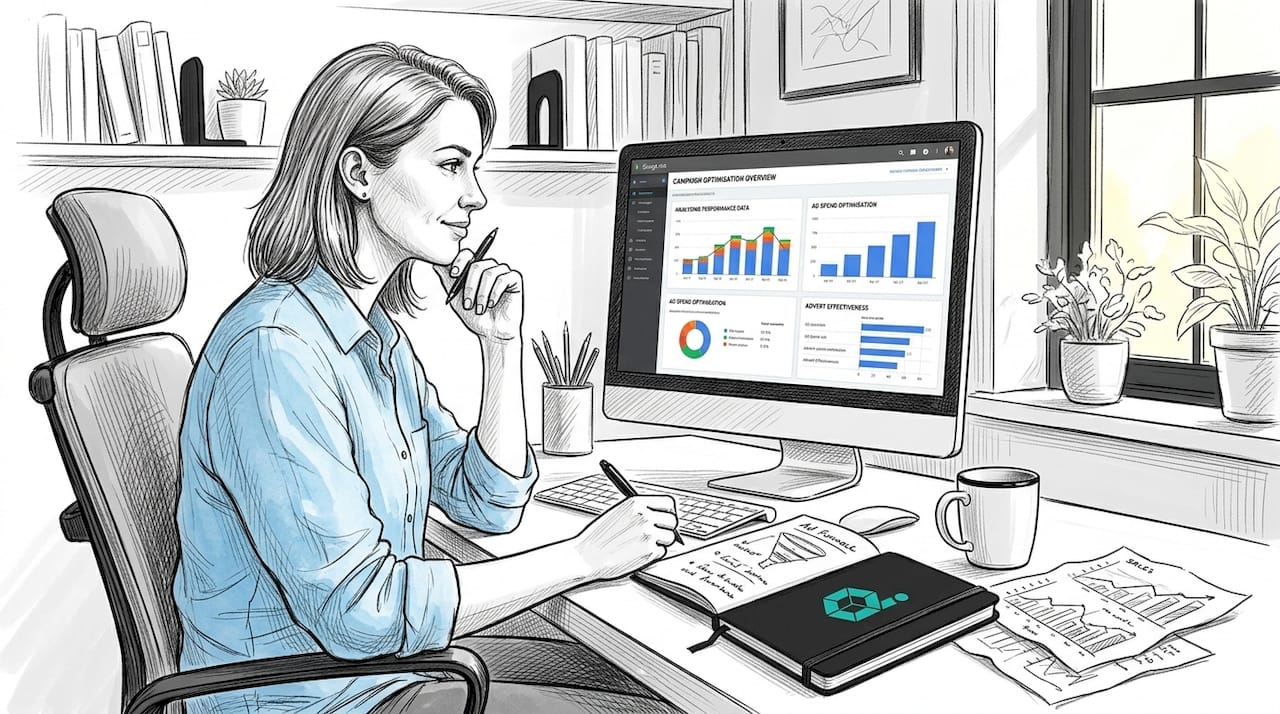
Getting noticed online as a small or medium-sized business in Australia feels like shouting into a crowd. Larger competitors have bigger budgets, established brand recognition, and dedicated marketing teams. But the playing field is not as uneven as it looks. Google Ads lets you reach people who are actively searching for exactly what you offer, using keywords, locations, and demographics to put your business in front of the right audience at the right moment. This article walks you through the core benefits of Google Ads, from precision targeting and budget control to real-time tracking and competitive edge, so you can make an informed decision about whether it’s right for your business.
Table of Contents
- Target the right customers with precision
- Control your advertising budget and only pay for results
- Instant data and measurable results to track success
- Get quick results and compete with the big players
- Maximise marketing impact by integrating Google Ads
- Our perspective: What most guides miss about Google Ads for Aussie SMBs
- Next steps: Amplify your business with Google Ads expertise
- Frequently asked questions
Key Takeaways
| Point | Details |
|---|---|
| Precise targeting | Google Ads lets you reach exactly the right customers by location, intent, and demographics. |
| Flexible budget control | You set the spend, pay only for clicks, and can start with as little as $10 per day. |
| Measurable results | Built-in analytics show what’s working so you can refine ads for maximum return. |
| Competitive benefits | Digital ads give small businesses the power to compete directly with bigger brands. |
| Best with integration | Combining Google Ads with SEO or social media increases overall marketing impact. |
Target the right customers with precision
One of the biggest frustrations for Australian SMBs is spending money on advertising that reaches the wrong people. A plumber in Geelong does not need to pay for clicks from someone in Darwin. Google Ads solves this problem directly.
The platform lets you define exactly who sees your ads based on a range of targeting options. You are not broadcasting to a general audience and hoping for the best. Instead, you are placing your message in front of people who are already looking for your product or service. That distinction matters enormously when every dollar counts.
Targeting high-intent searchers by keywords, location, and demographics makes Google Ads especially valuable for local Australian businesses. A customer searching “emergency electrician Melbourne” right now is far more likely to convert than someone who sees a random banner ad. That intent is what separates Google Ads from many other advertising channels.
Here is a quick overview of the targeting options available to you:
- Location: Target suburbs, cities, states, or a radius around your business address
- Language: Reach customers in their preferred language
- Time of day: Show ads during your opening hours or peak buying times
- Device: Prioritise mobile users if your audience searches on their phone
- Demographics: Filter by age, gender, and household income
- Keywords: Match your ads to specific search terms your ideal customers use
“The ability to reach customers at the exact moment they are searching for your product or service is what makes Google Ads one of the most powerful tools available to local businesses.”
For SMBs competing against national chains, this precision is a genuine advantage. You can focus your entire budget on a tight geographic area and a specific customer profile, rather than spreading spend thinly across a broad audience. Explore the Google Ads benefits in more detail to see how this targeting translates into real business outcomes. If you are also working on boosting local visibility through organic search, Google Ads can complement that effort immediately while your SEO builds momentum. Our Google Ads management insights cover how to set up targeting effectively from the start.
Control your advertising budget and only pay for results
Once you have defined your audience, the next step is staying in control of your marketing spend. This is where Google Ads genuinely stands apart from traditional advertising.

Google Ads runs on a pay-per-click (PPC) model. PPC means you only pay when someone actually clicks your ad, not simply when it appears on screen. If your ad is shown 1,000 times and only 50 people click, you pay for those 50 clicks. That is a fundamentally different risk profile compared to a newspaper ad or radio spot where you pay regardless of response.
The PPC model also has no minimum spend requirement. You can start with as little as $10 per day and scale up as you see results. This makes it accessible for businesses at every stage of growth.
Here is a practical look at what different daily budgets might achieve:
| Daily budget | Estimated monthly spend | Typical outcome |
|---|---|---|
| $10/day | ~$300/month | Good for testing keywords and gathering data |
| $20/day | ~$600/month | Steady lead flow for a local service business |
| $50/day | ~$1,500/month | Competitive visibility in most Australian metro markets |
The benefits of the PPC model include:
- Cost control: Set a daily or monthly cap and never exceed it
- Measurable spend: Know exactly where every dollar goes
- Performance-based: Only pay when someone engages with your ad
- Scalability: Increase or decrease budget based on results at any time
Pro Tip: Start with a modest test budget of $10 to $20 per day for the first two to four weeks. Use this period to identify which keywords and ad variations drive the most clicks and conversions before committing to a larger spend. Our Google Ads budgeting tips can help you structure this test phase effectively.
This flexibility is particularly valuable for seasonal businesses. You can increase spend during your busy period and pull back when demand drops, keeping your overall marketing investment efficient year-round.
Instant data and measurable results to track success
With your ad spend under control, it is essential to know exactly what you are getting in return. Google Ads provides some of the most detailed performance data available in digital marketing.
You can track clicks, conversions, and ROI in real time through the integrated analytics dashboard. Conversions can include phone calls, form submissions, online purchases, or any other action you define as valuable. This level of visibility lets you make informed decisions quickly, rather than waiting weeks for a report.
Compare this to traditional advertising channels:
| Metric | Google Ads | Traditional advertising (radio, print) |
|---|---|---|
| Cost per click | Tracked precisely | Not measurable |
| Conversion tracking | Yes, in real time | Rarely available |
| Audience data | Detailed demographics | Estimated reach only |
| Campaign adjustments | Instant | Requires new booking |
| ROI calculation | Clear and direct | Difficult to attribute |
The contrast is significant. With a print ad, you might estimate how many people saw it, but you cannot know how many acted on it. With Google Ads, every step of the customer journey is visible.
Here is how to track and measure a Google Ads campaign effectively:
- Set up conversion tracking before your campaign goes live so you capture data from day one
- Define your key metrics such as cost per conversion, click-through rate, and return on ad spend
- Review performance weekly and identify which keywords and ads are delivering results
- Pause underperforming ads and reallocate budget to what is working
- Use Google Analytics alongside Google Ads for a fuller picture of user behaviour on your website
Understanding ROI tracking is one of the most important skills you can develop as a business owner running paid campaigns. The data is there. You just need to know what to look for.
Get quick results and compete with the big players
Now that you know how to measure results, what does this actually look like in the real world for SMBs? The honest answer is that Google Ads can deliver visibility faster than almost any other channel.
Search engine optimisation (SEO) is valuable, but it typically takes three to six months before you see meaningful movement in organic rankings. Word-of-mouth is powerful but unpredictable. Google Ads can put your business on the first page of Google within hours of launching a campaign.
For SMBs, this speed is not just convenient. It is often critical. Whether you are launching a new product, running a seasonal promotion, or entering a competitive market, the ability to generate traffic immediately changes what is possible.
79% of SMBs say digital ads help them compete with larger firms, and 82% attribute revenue growth directly to digital advertising. These are not small numbers. They reflect a genuine shift in how smaller businesses are able to hold their ground against well-resourced competitors.
Google Ads works particularly well for:
- Seasonal promotions: Activate campaigns around key retail periods like Christmas, EOFY, or school holidays
- New product or service launches: Generate immediate awareness and early sales
- Local awareness: Reach customers in your suburb or city who are ready to buy
- Filling quiet periods: Drive demand during slower months with targeted offers
- Competitor conquest: Appear when customers search for your competitors by name
Review case studies for local results to see how Australian businesses have used Google Ads to drive real sales growth in competitive markets.
Maximise marketing impact by integrating Google Ads
To get even more value out of Google Ads, it pays to look at how they fit with your wider digital marketing strategy. Google Ads does not work in isolation. It performs best when it is part of a coordinated approach.
Google Ads delivers instant visibility at the top of search results. SEO builds long-term authority and organic traffic over time. Facebook and Instagram advertising generates awareness among people who may not be actively searching yet. Each channel has a distinct role.
Here is how the strengths of each compare:
- Google Ads: High intent, fast results, measurable ROI, ideal for capturing demand
- SEO: Long-term traffic, credibility, lower cost per click over time, builds brand authority
- Facebook and Instagram: Broad reach, visual storytelling, effective for brand awareness and retargeting
The impact of combined digital strategies is well documented. Businesses that run Google Ads alongside SEO tend to see stronger overall results than those relying on a single channel. The two approaches reinforce each other. Ads capture immediate demand while SEO builds a foundation for sustained growth.
Pro Tip: If you are just starting out, run Google Ads to generate quick revenue while investing in SEO at the same time. Within six to twelve months, your organic traffic will start contributing meaningfully, reducing your reliance on paid spend.
The risk of running Google Ads without expertise is wasted spend. Poorly structured campaigns, irrelevant keywords, and untested ad copy can burn through budget without delivering results. Learn about balancing Google Ads and Facebook as part of a broader strategy, and explore how boosting SEO alongside Google Ads creates compounding returns over time.
Our perspective: What most guides miss about Google Ads for Aussie SMBs
Most articles about Google Ads make it sound straightforward. Set up an account, write some ads, watch the leads roll in. In our experience working with Australian business owners over more than two decades, that is rarely how it goes.
The biggest mistake we see is the “set and forget” approach. Business owners launch a campaign, see some early results, and then leave it running without ongoing refinement. Over time, costs creep up, click quality drops, and the return on investment quietly deteriorates. By the time they notice, significant budget has been wasted.
Google Ads is powerful, but it rewards active management. Keywords need regular review. Bids need adjustment as competition changes. Ad copy needs testing. Landing pages need to convert the traffic you are paying for.
The businesses that get the best results from Australian Google Ads campaigns treat it as an ongoing process, not a one-time setup. Integrating it with SEO and other channels amplifies the impact significantly. The tool is excellent. Using it well is the real challenge.
Next steps: Amplify your business with Google Ads expertise
Ready to see real uplift from your advertising? Here is how we can help.
At Design Box Digital, we specialise in building and managing Google Ads campaigns that deliver measurable results for Australian SMBs. Whether you are starting from scratch or looking to improve an underperforming account, our team brings over 20 years of experience to every campaign. Explore our Google Ads solutions to see what is possible for your business. Our professional management service handles everything from keyword research to ongoing optimisation. You can also browse our success stories to see the results we have achieved for businesses like yours.
Frequently asked questions
How much should I budget for Google Ads as an Australian SMB?
Most SMBs start with $10 to $20 per day as a test, adjusting as results come in since Google Ads has no minimum spend requirement.
What makes Google Ads a good option for local businesses?
Google Ads can target local customers by location and search intent, helping small businesses appear in front of ready-to-buy customers in their area.
How quickly will I see results from Google Ads?
You can often start seeing clicks and conversions within days of launching a well-targeted campaign, making it one of the fastest ways to generate online traffic.
Is Google Ads better than SEO for fast results?
Google Ads offers instant visibility while SEO builds long-term organic traffic over months. Both have distinct advantages and work best when used together.
Can Google Ads really help me compete with big brands?
79% of SMBs say digital ads help them compete with larger firms, and 82% report increased revenue, confirming that Google Ads genuinely levels the playing field.