



TL;DR:
- Digital marketing involves a strategic mix of channels like SEO, paid ads, content, and email.
- Focusing on 2-3 well-chosen channels yields better results than spreading resources thin.
- Ongoing measurement and adjustment are essential for sustained growth and competitive advantage.
Many Australian business owners still think digital marketing means posting on Instagram or updating a website. It’s a costly misconception. Research consistently shows that businesses treating digital marketing as a core strategic investment, not an afterthought, outperform competitors on revenue, customer acquisition, and long-term brand visibility. This guide walks you through what digital marketing actually includes, which channels deliver real results for Australian SMEs, how to align your online and offline efforts, and how to measure what genuinely matters. Whether you’re starting out or refining an existing approach, this is your practical roadmap.
Table of Contents
- What is digital marketing? Shifting from confusion to clarity
- The essential channels: Choosing what works for Australian SMEs
- Integration is key: Aligning your digital and offline marketing
- Measurement and ROI: What actually drives growth
- Why savvy Aussie SMEs don’t use ‘set and forget’ marketing
- Next steps: Expert help for your digital marketing growth
- Frequently asked questions
Key Takeaways
| Point | Details |
|---|---|
| Focus your efforts | Prioritise 2–3 digital channels that suit your business and budget for the biggest impact. |
| Integrate marketing | Coordinate digital and traditional marketing for consistent messaging and improved results. |
| Measure outcomes | Track conversions and sales, not just vanity metrics, to ensure you’re getting a real return. |
| Invest strategically | Allocate 5–10% of annual revenue to digital marketing for sustained growth. |
What is digital marketing? Shifting from confusion to clarity
Digital marketing is every online tactic you use to grow awareness, attract customers, and drive sales. It’s not one thing. It’s a collection of connected strategies that, when used well, work together to build your business.
The core components include:
- Search engine optimisation (SEO): Getting your website found organically on Google and other search engines
- Paid advertising: Running targeted ads on Google, Facebook, Instagram, and other platforms
- Content marketing: Creating blog posts, videos, and guides that educate and attract your ideal customer
- Email marketing: Nurturing leads and existing customers with personalised, timely communications
- Social media marketing: Building community and brand awareness across relevant platforms
- Analytics: Measuring what’s working and using data to guide every decision
For Australian SMEs, the temptation is to try everything at once. That rarely works. The smarter approach is to focus your resources on two or three well-integrated channels that align with how your customers actually behave. A tradie in regional Queensland has different channel priorities than a fashion retailer in Melbourne’s CBD.
Marketing should be treated as a strategic investment, not a cost. The widely accepted benchmark for marketing budget allocation sits at 5 to 10 per cent of annual revenue for growing businesses. Spending less often means slower growth and missed opportunities.
“Treating marketing as an investment and focusing on a handful of channels is essential for success in Australia.”
This mindset shift, from ‘random acts of marketing’ to a focused, intentional plan, is what separates businesses that grow from those that stay stuck. If you’re unsure where to start, digital marketing in Melbourne specialists can help you map out a strategy that fits your specific market and goals. Strong SEO content writing is often one of the highest-value starting points for SMEs wanting sustainable organic growth.
The essential channels: Choosing what works for Australian SMEs
With a definition in place, let’s look at which channels offer the largest impact for SMEs and how to focus your resources.
Not every channel suits every business. The right mix depends on your budget, your customers’ habits, and how quickly you need results. Here’s a practical comparison to help you decide:
| Channel | Cost | Time to results | Local targeting | Effort required |
|---|---|---|---|---|
| SEO | Low to medium | 3 to 6 months | Strong | High upfront |
| Google Ads | Medium to high | Immediate | Very strong | Ongoing |
| Facebook/Instagram | Low to medium | 1 to 4 weeks | Strong | Medium |
| Email marketing | Low | 1 to 2 weeks | Moderate | Medium |
| Content marketing | Low to medium | 3 to 12 months | Moderate | High |
SEO and Google Ads are consistently the strongest performers for Australian SMEs because they capture people who are already searching for what you offer. Social media works well for awareness and retargeting. Email marketing delivers excellent returns for businesses with an existing customer base.
Businesses using AI and data-driven attribution achieve 15 to 20 percent better conversions by allocating budget wisely across channels. Attribution simply means understanding which touchpoints led to a sale, so you can invest more in what works.
Key things to consider when choosing your channels:
- Where do your customers spend time online?
- How quickly do you need leads or sales?
- Do you have the internal resources to manage each channel consistently?
- Is your business primarily local, national, or e-commerce focused?
For businesses with a local focus, local SEO for Australian businesses is often the single best investment. It builds long-term visibility in your region without the ongoing cost of paid ads.
Pro Tip: Don’t choose channels based on what competitors are doing. Choose based on where your specific customers are in their buying journey. A data-driven marketing platform choice review every six months keeps your strategy sharp.
Integration is key: Aligning your digital and offline marketing
After selecting your online channels, the next step is making sure all your marketing efforts, on and offline, work in harmony.
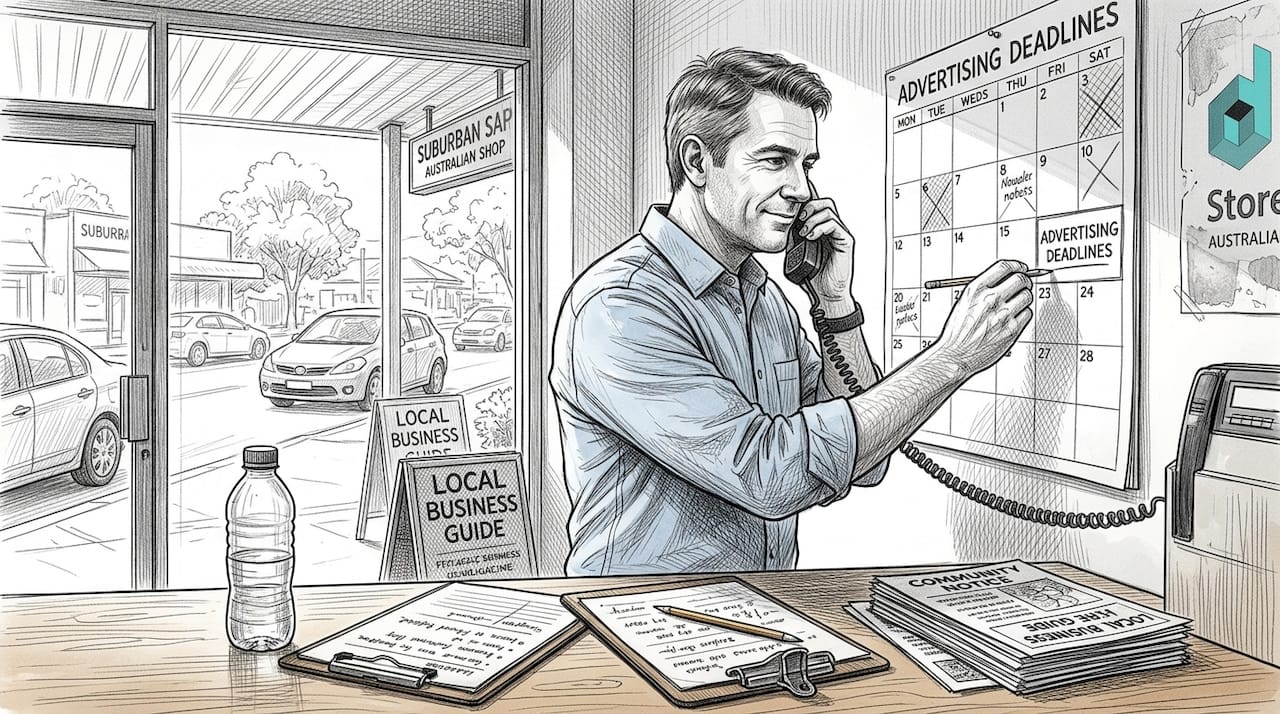
Customers today move between physical and digital touchpoints constantly. They might see your flyer at a local café, search your business name on Google, check your Instagram, and then call you. If your messaging is inconsistent across those touchpoints, you lose trust and conversions.
Here’s how to sync your marketing calendar and messaging effectively:
- Map your customer journey. Identify every point where a customer might encounter your brand, from a billboard to a Google search result.
- Align your messaging. Use the same taglines, offers, and visual identity across print, digital ads, social media, and your website.
- Coordinate campaign timing. Launch offline and online campaigns simultaneously so they reinforce each other.
- Use tracking to connect the dots. Add unique URLs or QR codes to printed materials so you can see exactly how many people moved from offline to online.
- Review and adjust. After each campaign, compare results from both channels and use the data to improve the next one.
Pro Tip: A simple QR code on a printed flyer linked to a dedicated landing page can tell you exactly how many offline interactions converted to website visits or enquiries. It’s one of the easiest ways to prove offline ROI.
“Integrating digital with offline activities leads to better attribution and higher conversion rates.”
For businesses in the building and design space, this kind of offline-digital integration is especially valuable, where project portfolios and local reputation drive decisions.
Measurement and ROI: What actually drives growth
To be confident your marketing efforts pay off, you need to track what matters, not just what’s easy to measure.
Vanity metrics are numbers that look impressive but don’t tell you whether your business is actually growing. Likes, impressions, and follower counts fall into this category. They can be useful as secondary signals, but they should never be your primary measure of success.
Actionable metrics are the ones tied directly to business outcomes:
- Leads generated: How many enquiries, form fills, or phone calls came from each channel?
- Cost per acquisition: How much did it cost to win each new customer?
- Conversion rate: What percentage of website visitors took a desired action?
- Customer retention rate: Are your existing customers coming back?
- Revenue attributed: Which channels directly contributed to sales?
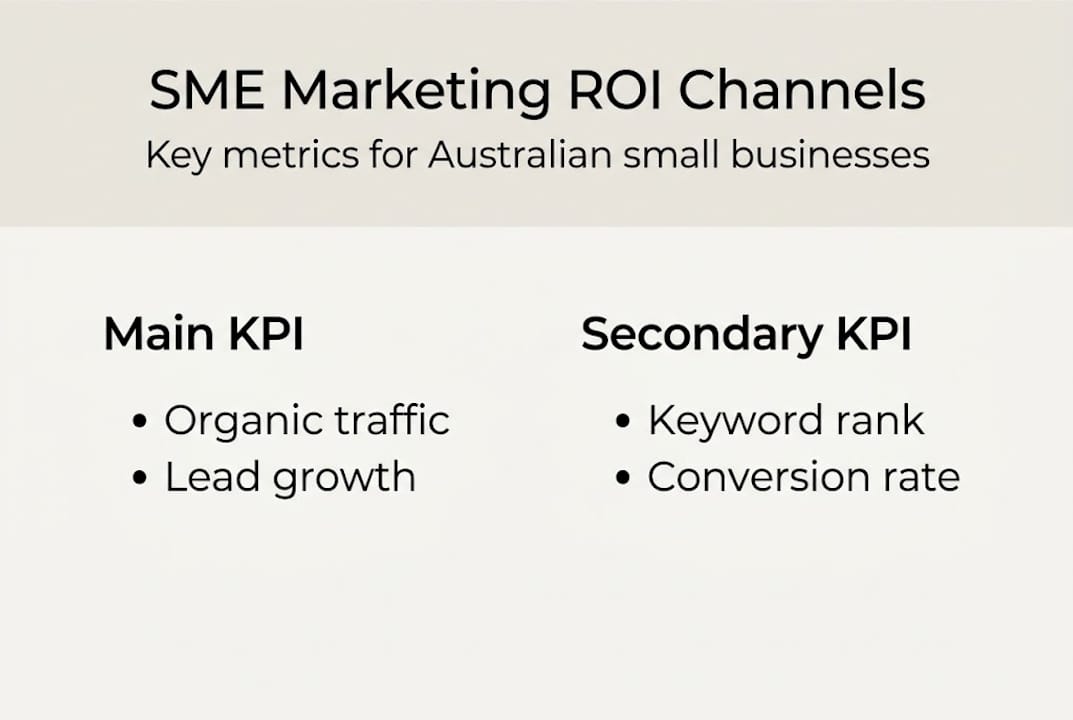
Here’s a quick reference for KPIs by channel:
| Channel | Primary KPI | Secondary KPI |
|---|---|---|
| SEO | Organic traffic and leads | Keyword rankings |
| Google Ads | Cost per conversion | Click-through rate |
| Social media | Leads and enquiries | Engagement rate |
| Email marketing | Revenue per email | Open and click rates |
| Content marketing | Organic leads | Time on page |
Prioritising measurable outcomes over vanity metrics delivers better ROI for small businesses. This isn’t just theory. Businesses that track the right numbers make faster, smarter decisions about where to reinvest.
AI-powered attribution tools are now accessible to SMEs and can show you which combination of touchpoints leads to a sale. This removes the guesswork and helps you allocate budget with confidence. For a deeper look at how measurement connects to measurable growth through SEO, the results speak for themselves.
Why savvy Aussie SMEs don’t use ‘set and forget’ marketing
Now that you understand how to measure your efforts, here’s a hard lesson most guides skip entirely.
The biggest mistake we see from Australian SMEs isn’t choosing the wrong channel. It’s treating marketing as something you set up once and leave alone. A business invests in a website or runs a few ads, sees some early results, and then stops reviewing or adjusting. Six months later, rankings drop, ad costs rise, and leads dry up.
Australia’s digital landscape shifts constantly. Search algorithms update. Consumer behaviour changes. Competitors enter your market. A strategy that worked in 2024 may underperform in 2026 without active management.
The SMEs that consistently outperform their competitors are the ones that review performance monthly, test new approaches regularly, and reinvest in what works. They treat marketing the way a good accountant treats finances, as something that needs ongoing attention, not a one-time task.
Partnering with a local SEO agency that understands the Australian market means you have someone actively monitoring, adjusting, and improving your strategy. That ongoing investment is what builds lasting market leadership, not a single campaign.
Next steps: Expert help for your digital marketing growth
Ready to put these insights to work and get ahead of your competitors?
At Design Box Digital, we’ve spent over 20 years helping Australian SMEs turn digital marketing from a confusing expense into a measurable growth engine. Our team specialises in SEO strategy, professional web design, and integrated campaigns built around your specific business goals. We don’t offer generic packages. We build strategies grounded in data, local market knowledge, and real results. If you’re ready to invest in your growth with a trusted digital marketing partner, get in touch with our team today for a tailored action plan.
Frequently asked questions
How much should an Australian SME budget for digital marketing?
Experts recommend allocating 5 to 10 percent of annual revenue to marketing, with a focus on two or three effective channels rather than spreading budget too thin.
What digital channels deliver the best ROI for Australian businesses?
SEO, Google Ads, and targeted social media consistently deliver strong returns for Australian SMEs. Businesses using data-driven attribution see 15 to 20 percent better conversions by investing in the right channels.
Is it worth hiring a local digital marketing expert?
Yes. Local specialists understand regional search trends, consumer behaviour, and Australian market nuances that generic offshore agencies often miss, leading to better-targeted campaigns and stronger results.
How can I measure if my digital marketing is working?
Focus on conversions, leads, and sales rather than likes or impressions. Measurable outcomes tied to revenue are the clearest indicators of whether your marketing investment is paying off.